Monday, June 5, 1989

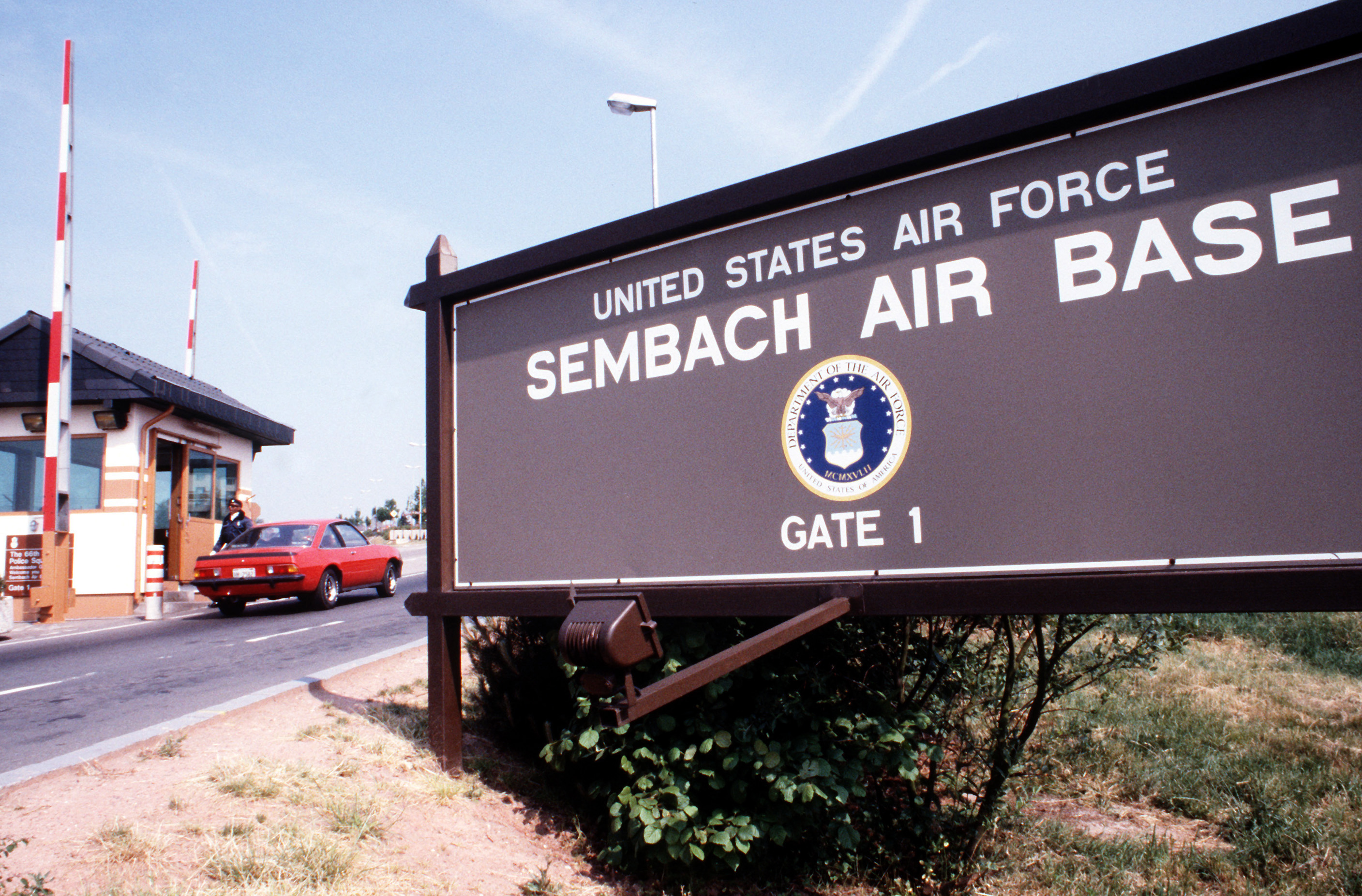
Sembach Air Base - The First Weeks

The street with the dormitories and the dining hall

When we first moved to the base, our dormitories were still being built. So we were put up in temporary housing, spread out over the base. Eventually we would move to the building in the back of the picture on the right, right next to the dining hall, the small building in the center. But for now, I ended up in the Air Force Security Forces' dorm, which housed the members of the base's Air Force military police (in the picture last building on the left). These guys meant business, as in the first few weeks, a bunch of our German guys were pulled over for speeding. They conducted their business just like police in the U.S.: They'd sit inconspicuously somewhere on the side, checking your speed, and when you went too fast, they'd come after you with their distinctive American police sirens and red and blue lights. However, over the next few weeks I would get to know some of them, hang out watching movies with them, or party at the NCO club on the weekend. I saw "Empire of the Sun" and other movies during that time, and watching these movies today brings back great memories.

My NCO Club membership card

The NCO club was very impressive and was no comparison to any German Air Force type of entertainment or hospitality venue for German NCOs. It consisted of a restaurant, a bar, a dance club, a lounge, a gift shop, and a snack bar. On the weekends they would have parties, live band performances or karaoke. And our commander, MajGen Rutherford, made sure, that we as Germans could join the NCO club, even though we were German Air Force, not U.S. Air Force.

This base was so much different from Birkenfeld, and eventually I spent more and more weekends at the base, rather than driving six hours home on Fridays, only to return after another six hour drive on Sundays. There was the NCO club, the movie theater, a 24 hour Bowling Alley, the commissary, the BX, a liquor store, Sunday football games, weekday baseball games.

The Tiger Palace movie theater

At Tiger palace (the football team's name was The Sembach Tigers, so everything was named after them, the movie theater for example, or the bowling alley - Tiger Lanes) I watched the latest movies, about six months before they would be released in German cinemas. And in English! I learned to appreciate the original voices of actors, even Arnold Schwarzenegger. When I watch movies that I first saw at Sembach, today, such as "Total Recall", it brings back memories and awakens a feeling of nostalgia for a time I tremendously appreciate and cherish.

Craig, Colin and John outside
Colin's dorm room
drinking Southern Comfort

I spent entire weekends, days and nights at the bowling alley, trying to improve my game, but never making it above 170. When there were enough of us around off duty or in between shifts, some of us would play softball on Tuesdays, and afterwards we would get the most delicious (and unhealthy) cheese hot dogs from "Frank's Franks" hot dog stand in front of the BX. And I particularly cherish the long summer evenings in front of our dorm rooms, listening to music (B52s is a vivid memory), drinking Southern Comfort and not having a care in the world. On weekends I would sleep in, eventually get up, and run next door to the dining hall to get breakfast, American style. We were enjoying life on base, and not once did we feel the need to venture off base to mingle with the locals.

It turned out that living on Sembach Air Base between the summer of 1989 and the fall of 1991 would become one of the best times of my life. Not only was there so much to do, but I would eventually meet people, who would change my life forever, and whom I truly believe, I owe everything I am today. A Monday night poker game in the fall of 1989 turned out to be an event where I met the most incredible group of people, some of whom also became my best friends.

Thursday, June 1, 1989

Sector Operations Center 3 - The Move

In the spring of 1989 we were notified that the move from Boerfink to Sembach would commence. We were all very excited, not only would I no longer have to work in a dark, underground windowless office, but rather in a bright, sunny, modern office at HQ 17th United States Air Force, but the shift guys would get the newest, most sophisticated computer and radar equipment available at the time. Rumors had it, that each of the five stations cost more than 20 Million Dollars.

The ops room of course still had to be in a secure, bomb proof facility under ground, and the Sembach bunker, no longer in service as of today, was right under the football field. The entrance rather inconspicuous right next to the grandstand.

A sector operations center was comprised of five stations. Each station was manned by an officer and his or her "tech", an NCO. When you entered the new ops room, you immediately faced the SAM station, or Surface-To-Air Missile station, which monitored air defense systems available to fight off any intruders in the air from the ground. Next to SAM was the Fighter station, commanding all subordinate fighter units capable of fighting off intruders in the air. Every now and then I would fill in for the fighter tech and was able to conduct a "training scramble", which means, I radioed one of the tactical fighter wings within our sector, and ordered them to conduct an aerial interception with two fighter jets for training purposes, a so-called Tango- or T-Scramble. Within minutes two jets would take off from one of the four tactical fighter wing bases under SOC3 command, Bitburg, Spangdahlem, Ramstein or Hahn. Each unit had a call sign, I can't remember the ones for the air bases, but we were Copper Ring, the Boerfink CRC was Hard Tire, the CRC at Lauda was Straw Basket, and SOC4 at Messstetten was Sweet Apple. So you would call the base via radio by its call sign, and specify "Tango Scramble" along with coordinates, altitude and other information needed for the pilots to find their - in this case - imaginary targets. This was exciting stuff, vital to Europe's air defense during a most unstable time of the cold war (no one knew what the Soviets would do about the uprisings going on throughout most of the Warsaw Pact countries, such as Hungary, Czechoslovakia, Poland, even East Germany), and I was right there in the smack middle of it.

Spangdahlem AB F-16s

I remember the Intel station, gathering information from NATO intelligence services, including the German BND and the American CIA, but mostly from military intelligence agencies such as MAD, the Air Force's ISR, the British DI and so forth.

Then there was the emergency action station. During peace time my main job was to maintain, control and register all classified materials received, sent out, handled or held by SOC3. This included among many other documents the top secret NATO encryption code handbook, containing all the encryption and decryption keys used in radio communications. In case of war, or during exercises, I was the Emergency Action Technician, responsible for receiving encrypted orders from SHAPE, the Supreme Headquarters of Allied Powers in Europe, decrypt them, relay them to the Sector Controller, wait for his response, encrypt the response and respond with the encoded message or forward it to our subordinate units. Since I was in charge of NATO's most secret documents, I sometimes carried a sidearm as protection, especially when transferring classified documents between bases.

The Sector Controller being in charge of it all would sit and monitor everything, and ultimately had the supreme command over any subordinate air defense units within the sector.

Being the most sophisticated of all the SOCs in Europe, we also became the show-off Sector, meaning periodic visits by dignitaries, such as NATO commanders, parliamentary oversight and appropriation committees, and other politicians. Often enough we had Generals, Senators, Congresspeople and what not enter the ops room, admiring the equipment and exchanging the occasional few words with the crew.

This is a picture from the 601st Air Operations Center at Tyndall AFB, Florida. It illustrates pretty much, what our fancy new ops room looked like (minus the flat screens, but we did have color monitors):