Sunday, October 1, 1989

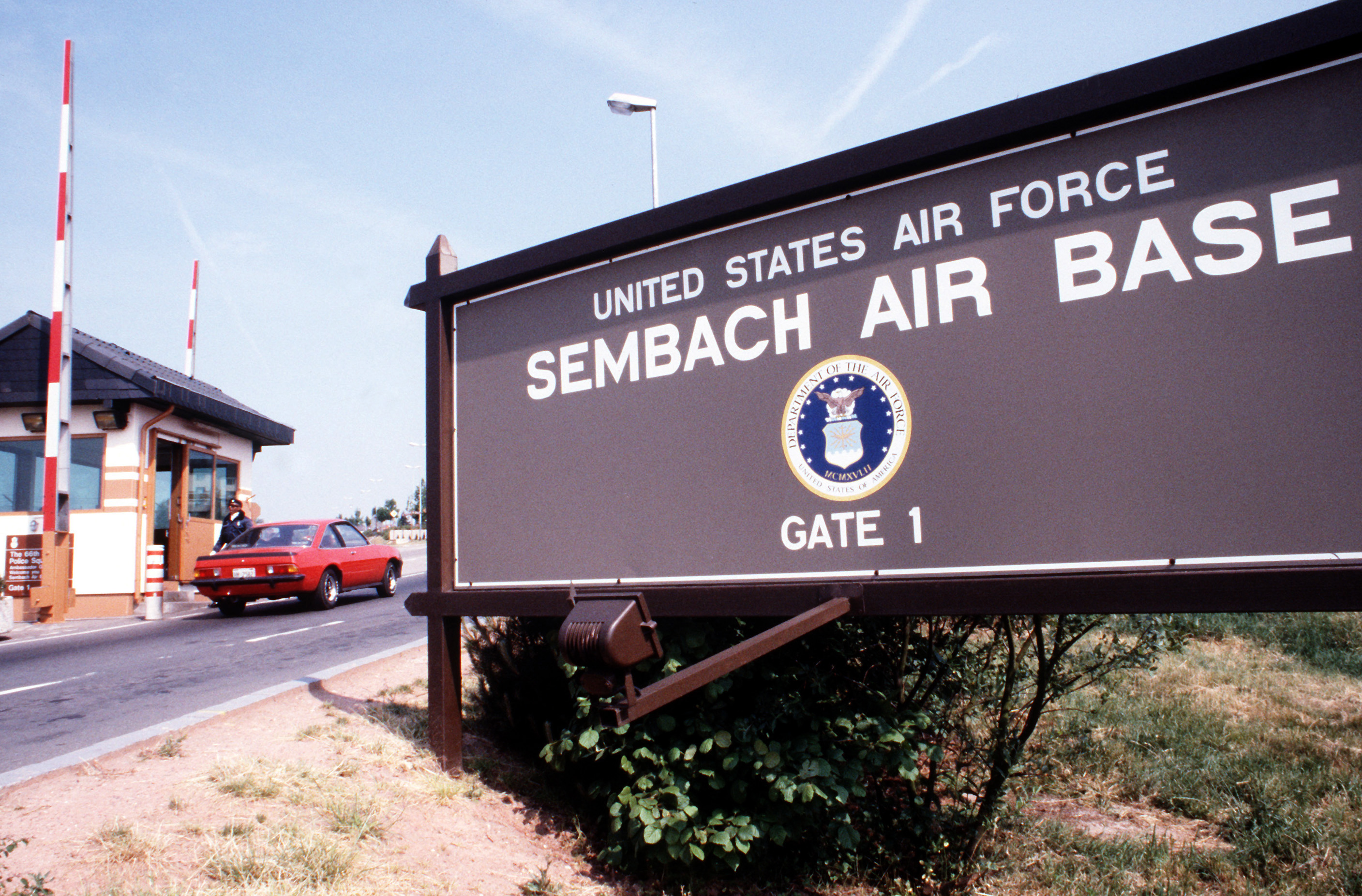
Sembach Air Base - The Serious Stuff

MIG 29 at the 1989 Paris Air Show

From a duty point of view, namely the SOC3 being responsible for air defense of one of the four sectors over (West) German airspace, things were very interesting in 1989 and 1990. NATO's military leadership was more relaxed with respect to the Warsaw Pact, and permission was granted for Soviet aircraft to fly over NATO airspace to participate at the 1989 Paris Air Show. The Soviets were to display their newest flagship fighter aircraft, the MIG-29, and for the first time in the West, their newest interceptor SU-27, and they were given coordinates for flight corridors to fly from their East German bases to land at Le Bourget airport. Once the aircraft entered NATO airspace it vanished from the radar screens. Minutes later we got a call from Bitburg airbase, where a MIG-29 was seen overflying the base at low altitude. F16s were scrambled to intercept the rogue Russian, and once the 36th TFW aircraft caught up with them the were escorted to their actual destination in France. The MIG-29 never made it back though, as it spectacularly (and for the Russians embarrassingly) crashed, with the pilot ejecting seconds before impact. 

The hijacked Hungarian Airlines B727
being escorted by USAF Security Police at
Rhein-Main International Airport in Frankfurt

Earlier that year, there was another incident in our sector, when two Czech youths hijacked a Hungarian Airlines flight at Prague International Airport and forced it to fly to Frankfurt. Airliners can identify themselves as being hijacked by sending out a specific squawk or transponder code, which would then trigger an alert on our radar screens. However, since the 15 and 16 year old boys took control of the aircraft at the airport, it was already known to pretty much everyone that a plane was in trouble. When an aircraft is hijacked, airspace around their flight path is immediately closed to civilian air traffic, and the military assumes control of air traffic and space. When we learned that it was two teenagers trying to flee the East, although armed and considered dangerous, we kind of cheered them on and all clapped, when they landed safely in Frankfurt later that morning. No one was harmed, and the boys asked to stay in West Germany when they peacefully surrendered to the authorities.

The Berlin Corridors as displayed at ATC Tempelhof radar
The border between East and West along our sector, that we had to guard so closely for decades, making sure that no aircraft approach let alone enter the Air Defense Identification Zone (ADIZ), a belt to the west and east of the East/West border 15 miles wide each side, became more and more insignificant. Civilian aircraft traveling to West Berlin had to follow three narrow air corridors where flight path, air speed and altitude were strictly enforced by the Soviets. Any aircraft approaching the West outside those corridors, or violating the ADIZ and entering NATO airspace without a filed flight plan were intercepted by two of the fighter jets stationed at the U.S. airbases across the sector, mainly Bitburg and Spangdahlem. Those interceptions, or scrambles, were triggered at the SOC. 

The military service for members of the German Armed Forces up until 1991 was usually very boring, as German military was not authorized to conduct any military operations other than to defend the German homeland in case of an outside attack. Therefore the military routines were normally very boring, and theoretical. Not so for the Air Force, and especially not so for us at the SOC. We were witnessing real military action every single day. Military confrontations between NATO and Warsaw Pact aircraft happened on a regular basis, and even though, nothing serious ever happened, our attitude down in the bunker was being concentrated and vigilant at all times. And we didn't trust anyone. 

One day, a track on the radar approached the ADIZ from the East, and continued approaching West German airspace. There was no valid transponder code, no flight plan, nothing. Two jets were scrambled to intercept. Turned out it was a old guy who had flown from Sylt south a few days earlier, ended up getting lost in poor weather (no GPS back then) and ended up in East German airspace, where he was intercepted, forced to land, and interrogated for days, before being released, probably after a hefty amount of tax money was paid to the East Germans, and just sent on his way to fly home. I believe the old fellow ended up having to pay for the cost of the scramble, which was about $130,000 at the time.           

Monday, June 5, 1989

Sembach Air Base - The First Weeks

The street with the dormitories and the dining hall

When we first moved to the base, our dormitories were still being built. So we were put up in temporary housing, spread out over the base. Eventually we would move to the building in the back of the picture on the right, right next to the dining hall, the small building in the center. But for now, I ended up in the Air Force Security Forces' dorm, which housed the members of the base's Air Force military police (in the picture last building on the left). These guys meant business, as in the first few weeks, a bunch of our German guys were pulled over for speeding. They conducted their business just like police in the U.S.: They'd sit inconspicuously somewhere on the side, checking your speed, and when you went too fast, they'd come after you with their distinctive American police sirens and red and blue lights. However, over the next few weeks I would get to know some of them, hang out watching movies with them, or party at the NCO club on the weekend. I saw "Empire of the Sun" and other movies during that time, and watching these movies today brings back great memories.

My NCO Club membership card

The NCO club was very impressive and was no comparison to any German Air Force type of entertainment or hospitality venue for German NCOs. It consisted of a restaurant, a bar, a dance club, a lounge, a gift shop, and a snack bar. On the weekends they would have parties, live band performances or karaoke. And our commander, MajGen Rutherford, made sure, that we as Germans could join the NCO club, even though we were German Air Force, not U.S. Air Force.

This base was so much different from Birkenfeld, and eventually I spent more and more weekends at the base, rather than driving six hours home on Fridays, only to return after another six hour drive on Sundays. There was the NCO club, the movie theater, a 24 hour Bowling Alley, the commissary, the BX, a liquor store, Sunday football games, weekday baseball games.

The Tiger Palace movie theater

At Tiger palace (the football team's name was The Sembach Tigers, so everything was named after them, the movie theater for example, or the bowling alley - Tiger Lanes) I watched the latest movies, about six months before they would be released in German cinemas. And in English! I learned to appreciate the original voices of actors, even Arnold Schwarzenegger. When I watch movies that I first saw at Sembach, today, such as "Total Recall", it brings back memories and awakens a feeling of nostalgia for a time I tremendously appreciate and cherish.

Craig, Colin and John outside
Colin's dorm room
drinking Southern Comfort

I spent entire weekends, days and nights at the bowling alley, trying to improve my game, but never making it above 170. When there were enough of us around off duty or in between shifts, some of us would play softball on Tuesdays, and afterwards we would get the most delicious (and unhealthy) cheese hot dogs from "Frank's Franks" hot dog stand in front of the BX. And I particularly cherish the long summer evenings in front of our dorm rooms, listening to music (B52s is a vivid memory), drinking Southern Comfort and not having a care in the world. On weekends I would sleep in, eventually get up, and run next door to the dining hall to get breakfast, American style. We were enjoying life on base, and not once did we feel the need to venture off base to mingle with the locals.

It turned out that living on Sembach Air Base between the summer of 1989 and the fall of 1991 would become one of the best times of my life. Not only was there so much to do, but I would eventually meet people, who would change my life forever, and whom I truly believe, I owe everything I am today. A Monday night poker game in the fall of 1989 turned out to be an event where I met the most incredible group of people, some of whom also became my best friends.

Thursday, June 1, 1989

Sector Operations Center 3 - The Move

In the spring of 1989 we were notified that the move from Boerfink to Sembach would commence. We were all very excited, not only would I no longer have to work in a dark, underground windowless office, but rather in a bright, sunny, modern office at HQ 17th United States Air Force, but the shift guys would get the newest, most sophisticated computer and radar equipment available at the time. Rumors had it, that each of the five stations cost more than 20 Million Dollars.

The ops room of course still had to be in a secure, bomb proof facility under ground, and the Sembach bunker, no longer in service as of today, was right under the football field. The entrance rather inconspicuous right next to the grandstand.

A sector operations center was comprised of five stations. Each station was manned by an officer and his or her "tech", an NCO. When you entered the new ops room, you immediately faced the SAM station, or Surface-To-Air Missile station, which monitored air defense systems available to fight off any intruders in the air from the ground. Next to SAM was the Fighter station, commanding all subordinate fighter units capable of fighting off intruders in the air. Every now and then I would fill in for the fighter tech and was able to conduct a "training scramble", which means, I radioed one of the tactical fighter wings within our sector, and ordered them to conduct an aerial interception with two fighter jets for training purposes, a so-called Tango- or T-Scramble. Within minutes two jets would take off from one of the four tactical fighter wing bases under SOC3 command, Bitburg, Spangdahlem, Ramstein or Hahn. Each unit had a call sign, I can't remember the ones for the air bases, but we were Copper Ring, the Boerfink CRC was Hard Tire, the CRC at Lauda was Straw Basket, and SOC4 at Messstetten was Sweet Apple. So you would call the base via radio by its call sign, and specify "Tango Scramble" along with coordinates, altitude and other information needed for the pilots to find their - in this case - imaginary targets. This was exciting stuff, vital to Europe's air defense during a most unstable time of the cold war (no one knew what the Soviets would do about the uprisings going on throughout most of the Warsaw Pact countries, such as Hungary, Czechoslovakia, Poland, even East Germany), and I was right there in the smack middle of it.

Spangdahlem AB F-16s

I remember the Intel station, gathering information from NATO intelligence services, including the German BND and the American CIA, but mostly from military intelligence agencies such as MAD, the Air Force's ISR, the British DI and so forth.

Then there was the emergency action station. During peace time my main job was to maintain, control and register all classified materials received, sent out, handled or held by SOC3. This included among many other documents the top secret NATO encryption code handbook, containing all the encryption and decryption keys used in radio communications. In case of war, or during exercises, I was the Emergency Action Technician, responsible for receiving encrypted orders from SHAPE, the Supreme Headquarters of Allied Powers in Europe, decrypt them, relay them to the Sector Controller, wait for his response, encrypt the response and respond with the encoded message or forward it to our subordinate units. Since I was in charge of NATO's most secret documents, I sometimes carried a sidearm as protection, especially when transferring classified documents between bases.

The Sector Controller being in charge of it all would sit and monitor everything, and ultimately had the supreme command over any subordinate air defense units within the sector.

Being the most sophisticated of all the SOCs in Europe, we also became the show-off Sector, meaning periodic visits by dignitaries, such as NATO commanders, parliamentary oversight and appropriation committees, and other politicians. Often enough we had Generals, Senators, Congresspeople and what not enter the ops room, admiring the equipment and exchanging the occasional few words with the crew.

This is a picture from the 601st Air Operations Center at Tyndall AFB, Florida. It illustrates pretty much, what our fancy new ops room looked like (minus the flat screens, but we did have color monitors):


Wednesday, March 1, 1989

Sector Operations Center 3 - Birkenfeld

The time at Boerfink turned out to be relatively short. We received word that SOC 3 would move at some point later that year. It wasn't clear exactly when, as such a critical element of the European Air Defense structure had to be operational and vigilant 24 hours a day, 7 days a week, 365 days of the year. It relied heavily on electronics, softwaere and hardware, and above all, secrecy. The setup at a different location must have been a logistical nightmare. So we waited and made the best of our time in and around Birkenfeld. Our accomodations weren't top notch, typical German military dormitories, but we had the liberty to arrange our small rooms to our taste, and as best we could. Since I didn't have to work shifts, I mostly had the weekends off, and I usually returned home to Munster on the weekends, where I would sometimes wear my air force uniform with exotic NATO and Air Force badges and insignia on around town, just to show off to the army guys dominating the scene. Sometimes, I stayed in Birkenfeld though, especially later that spring, and we ended up hanging out with some local kids we met, barbecuing and just having fun. Thursdays, we sometimes went to a dance club in Idar-Oberstein. But all in all, life in the first half of 1989 was relatively uneventful, and we eagerly awaited our move to a U.S. Air Force base, with an NCO club, restaurants, a movie theater, a bowling alley, commissary, BX, sports venues and so much more.

My dorm room at Heinrich-Hertz-Barracks, Birkenfeld Jan 89 - Jun 89


Wednesday, February 1, 1989

Sector Operations Center 3 - The Bunker

When we stepped into the Operations room, I was overwhelmed. There were Americans, Canadians, Germans, sitting in front of radar screens, phones ringing everywhere, beeps and sounds left and right. Stefan reminded me that we were in the middle of SYSEVAL, and that everyone is really busy, highly concentrated and we shouldn't be in anyone's way. Somehow I ended up being introduced to a Capt. Nelson, a very nice U.S. Air Force Captain in charge of a station called "Intel". I soon learned that the Intel guy was responsible for gathering, analyzing and filtering all sorts of intelligence material. This was Top Secret stuff, there were spy photos taken from extremely high altitudes, possibly satellites, yet still showing remarkably sharp images of some airbase, with personnel looming around what looked like MIG aircraft, pinned to a wall. There was also a map, one of those plexiglass ones, like the ones airmen write on in mirror letters from one side, so the people on the other side can read what they write. This one was attached to the wall though, and it showed a map of Central Europe. In some spots stuck translucent plastic pins, that looked like little parachutes. Capt Nelson explained to me, that he wanted me to pin these markers at locations he would give me the coordinates for, and that they represented nuclear bomb explosions. There were light blue pins, and there were light red pins. Light blue were "ours", light red were "theirs". This is when I heard the term "Fulda Gap" for the first time. At the time all this was top secret, and I could not talk to anyone outside the ops room about this. Now, there is no Fulda Gap anymore, well at least not from a strategic NATO and military point of view, but I learned the cruel and relentless reality of military and nuclear strategy that was followed at the time, and I was glad, that it was a) only an exercise, albeit a very realistic one, and that b) I was safe in one of the strongest, and most heavily guarded and defended military complexes in the Western hemisphere.

The old stations shortly before being dismantled

At some point the "tapes" that were used to simulate an all-out-war attack by a hostile power in the East were paused, and we retreated to a conference room to a debriefing and to recap the day's events and performance. This is where this photo was taken... I'm in the back on the right, half way hidden behind Uffz Martin Staffeldt, a guy incidentally from Celle, not far from where I grew up and my predecessor Stefan. I also learned, that Capt Nelson's (sitting, second to the left next to Col Kluss) first name was Anthony or as everyone called him, Tony, and that he would be promoted to Major not long after. Major Tony Nelson of the U.S. Air Force. I don't think we had a Jeannie among our female crew though. In any case, a very nice guy to work with and for. He transferred at some point not much later and was replaced by Major Carol Sykes, also a tremendously capable and nice officer.

The crew of SOC 3 during SysEval 1989 - Col Heinz Kluss in front center

Capt Nelson's main assistant was TSgt Forace MacDaniels, sitting at the table on the far right. Next to him is TSgt, later MSgt Lewis O'Bryant, or "OB" as everyone called him, my immediate supervisor and boss for the next two years. Not the easiest fellow to work for or with, but he did teach me a lot, especially about desktop computers and MS DOS, which were relatively unaccessable to the ordinary person back then.

The crew was a highly effective mix of Americans (Air Force and Army, since ground based air defense was the Army's responsibility in the U.S. military), and Germans. I still remember our CO, LCol Rudy Zeller, who later told exciting stories of his time as a fighter pilot, LCol John Walker, our DO, MSgt Williams, one of the very excellent fighter techs, Maj Harald Gebauer, also a former fighter pilot. I also learned, that some of the SOC3 staff tragically, and needlessly had lost their lives, when terrorists brought down PanAm flight 103 over Lockerbie a few years before.

At one point during the briefing, I heard my name called by Col. Kluss. I stepped forward and he introduced me to everyone, and - unlike anything I've ever seen before - I was welcomed by everyone, from Airman, Sergeant to Captain, Major and Colonel with cheerful applause. I think I will like it here, I thought. Then Col Kluss surprised me, because he had received my promotion orders, and right there and then, I received my "Unteroffizier" promotion certificate and shoulder sleeves.

In the weeks and months that followed my first week at SOC3 and Syseval, I was mainly working from the Admin offices, across the hall from LCol Rudi Zeller, the German CO, and Maj Nelson, the Intel Officer, picking up messages from the Comm Center, and sending out messages by typing them on NATO forms and taking them to the cheerful RAF chaps. Every now and then I would descend into the bunker and visit the guys down below. The atmosphere was very casual, even amongst the officers, soon I would be on a first name basis with some of them, except of course for the DO, LCol Walker, and the most senior officers.

I enjoyed the time at Boerfink, especially the NATO mess hall or "chow" hall, as it was jokingly called by the Americans. The U.S. cooks made the best damn omelettes I ever had. Hot damn, with cheddar cheese and ham. I still remember what they looked and tasted like.

Monday, January 30, 1989

German Air Force - Boerfink

I arrived at Birkenfeld Air Force Base on Sunday evening, January 29th, 1989 after driving for miles through what seemed like the middle of nowhere. I kept thinking, this isn't probably much different from Goosebay, except for maybe the perpetual cold.


The following Monday morning I spent mostly getting settled in, and then it was already off to the bunker at Boerfink. The bunker was built in the 60s, nicknamed ERWIN and served as Primary War Headquarters Allied Forces Central Region (PWHQ AFCENT). We had NATO minibusses pick us up at Birkenfeld, and made numerous stops on the way to the top secret mountain facility, picking up more bunker personnel on the way, including U.S. Air Force members... wow, this was the first time I saw American military from up close. I recall my first bus ride with a female Captain with huge glasses, I forgot her name, and Sgt Richard Babb, who turned out to work with me at Sector Operation Center 3 Admin. My predecessor, a German guy named Stefan (I can't recall his last name) was to train me in my duties, and then he'd be off to his new assignment at NATO headquarters in Brussels. 

When we arrived I learned, that Sector Operations Center 3 was in the middle of a SYSEVAL, a System Evaluation exercise conducted by NATO HQ to evaluate - as the name suggests - the system readiness and effectiveness over a period of about a week. Readiness and effectiveness of the system... what system? What did a Sector Operations Center actually do? I had no idea, except it had something to do with monitoring air traffic in order to defend NATO air space. Excited about my new assignment, I passed the gigantic steel gates of the facility, eagerly anticipating the world of secret air space defense. 

We proceeded through a very long and spacious corridor, more like a tunnel until we arrived at a set of relatively steep and narrow stairs. Down we climbed. Once we were at the bottom of the stairs, there was another set of very heavy looking steel doors, and a checkpoint, with U.S. Military Police checking IDs, and entry credentials. I had received my USAFE ID already earlier that day, so confident, yet nervous at the same time, I showed my ID to the heavily armed guard.

We walked through a steel door and stopped at a large room with some British airmen in their blue-grey Royal Air Force uniforms. This was the Comms Center, where NATO messages were received and sent out. The guy in charge was an RAF Sergeant named Alan, a friendly and cheerful chap. I had taken the time to learn both the U.S.A.F., as well as RAF rank insignia before. I was told, that I would be working with personnel from all major NATO countries, but mostly U.S. and Royal Air Force. 

Stefan picked up some "traffic", messages flagged Confidential, Secret and even Top Secret, signed for them and we continued to dive even deeper into the bunker complex, which was designed to not only house major European NATO heads of government, but the entire NATO command structure during a nuclear war, and was therefore designed to withstand a nuclear bomb detonation. We continued to move through more tunnels, climbed down more stairs, and passed additional steel doors until we arrived at a large and somewhat noisy room with lots of computer terminals, radar screens and German Air Force personnel. Stefan explained, that this was the Control and Reporting Center (CRC), an airspace monitoring facility under national German Air Force command. He explained, that we would have nothing to do with "them", as we are their superiors at NATO level. 

Later I learned that there was a distinction between Germans and NATO allies being in charge of German Air Space. Inspite of Germany's regaining sovereignty in 1954, since the end of World War II German Airspace was still under the ultimate control of the four victorious powers, Great Britain, France, and the U.S. in the West, and the Soviet Union in the East. Hence, no German military aircraft was allowed to conduct interceptions over German airspace, and there was also no German military command in charge of German Airspace. This changed in 1990 with Germany's reunification and the signing of the "Two-Plus-Four" Treaty, practically and ultimately ending World War II and all the restraints Germany was (rightfully, I may add) placed under since the collapse of the Third Reich. But  this was the reason, why the executive air space defense responsibilities were with NATO, rather than with the West German military. A CRC was allowed to watch, monitor and report any violation of NATO airspace, but to intercept illegally penetrating aircraft with possibly hostile intentions was reserved exclusivly to the Allies, Great Britain in the North (Sectors 1 in Aurich, and Sector 2 in Goch), and the U.S. (Sector 3 at Boerfink, and Sector 4 at Messtetten). The French had relinquished their aerial responsibilities when they left the military part of NATO in the 60s, but still had liason officers present, at least at our Sector.