Monday, September 30, 1991

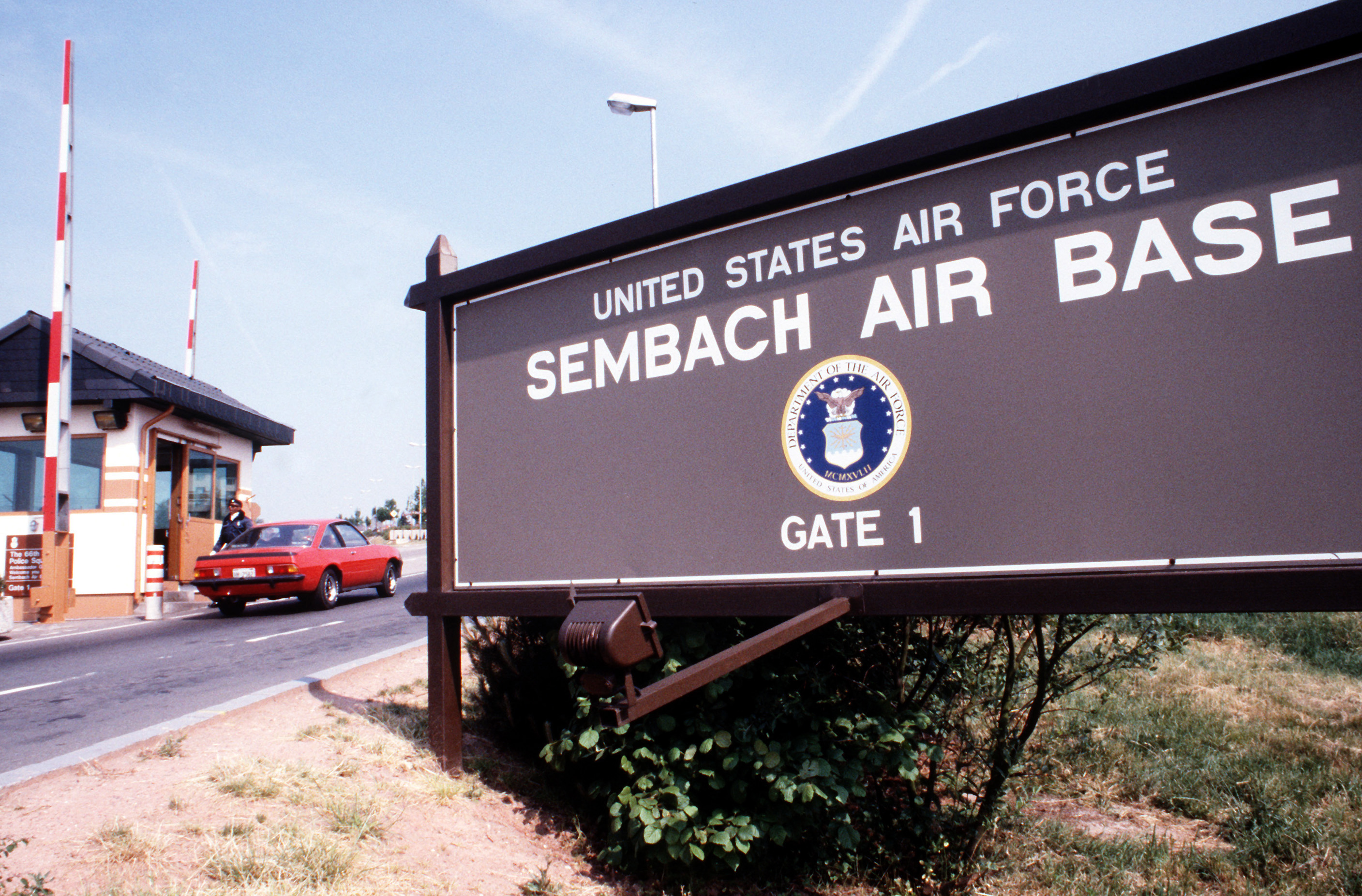
My last year in the Air Force and at Sembach Air Base

1991 was to be my last year in the Air Force, and consequently at Sembach Air Base. Like I said before, the time I spent on base and the people I met during that time shaped my future like nothing before and probably nothing since. Desert Storm was over in a little less than three months, and by March, most deployed personnel had returned to Sembach, including my friends. 

Over the spring and summer of 1991, Colin, Craig, and John all got orders to new assignments, or in Colin's case transition to serve his remaining military service with the California Air National Guard. This was to be the end of the "NATO Connection". 

When I returned from my trip to the U.S., Colin was already preparing to return to the U.S.. This came as a shock, since Colin was the closest and best friend I ever had. We did so many things together, spent so much time together, that I wouldn't know what to do once he would leave. We had taken a trip to Paris to see the Paris Supercross (with our "hero", French Motocross Superstar Jean-Michel Bayle), and had gone on a weekend train trip across Bavaria, Switzerland and Austria. 

I don't recall the exact day Colin left, but John and James were still around. I didn't see much of Craig anymore, since he had moved off base. Through my German friends Marcus and Martin, I met some other U.S. Air Force members, who eventually, albeit for a short time, became pretty good friends, namely a group around a guy named Michael Freeman of Scranton, PA. It's funny how I remember his name, and I think it's mostly because we talked a lot about how many Jewish Americans viewed modern day Germans, and how his views had changed drastically to a positive one, simply by meeting Germans like myself. 

I took a group of them to the North Sea Coast on the island of Sylt one weekend during the summer, and we had a blast.

In September, another one of my new friends and I went to the Motocross of Nations race weekend in Valkenswaard in the Netherlands. There I was able to see my Supercross heroes from up close, especially Damon Bradshaw, Jeff Stanton, Mike Kiedrowski, Stefan Everts, Jean-Michel Bayle, and above all, Mr. Motocross himself, Roger de Coster. At some point I was by the track, when suddenly Jeff Stanton walked up to me to ask, when they had last watered the track. I told him, I didn't know, but being star struck and a bit flabbergasted, I asked him, if I could take a picture, since one of my air force friends was a big fan, but he got reassigned to the U.S. and sadly had to miss this event. He gladly obliged. 

The summer went by and my last day wearing the uniform approached quickly. It is a tradition in the U.S. military to have your picture taken toward the end of Basic Training, sitting or standing proud in front of the Star Spangled Banner. We don't share that tradition in the German Armed Forces, but in August an opportunity presented itself, when a professional military photographer was available to have one's picture taken on base. I spoke to Col Fricke, and he allowed me to "borrow" the German and American flags from our SOC 3 headquarters, I put on my blue dress uniform and walked down to the BX, where the photo sessions were held. The photo taken is one of the proudest moments of my life, and to this day, I show it to everyone not fast enough to run away. My uniform also sprouts an honor we received for our volunteer work at the post office. 

We were giving the U.S.A.F. occupational badge, in my case the United States Air Force Information Management/ Administration badge in recognition to our services to the United States Air Force during Operation Desert Storm.  

September 30th, 1991 was the day that I left the German Air Force, and left Sembach Air Base, not knowing what to do next, quite frankly. Since I had some money saved, I decided to head back to the U.S.

Monday, April 1, 1991

My first trip to the U.S.

At some point before Christmas 1990, Colin and I had taken a trip to Berlin together, where we visited some distant East German relatives of mine. Ralf was a cousin fifteen times or so removed, he was our age, and we got along great. Unlike his older brother, he had no regrets and excitingly looked forward to a future in a free and democratic Germany, with plenty of opportunities and the sky being the limit. He and his lovely girlfriend Astrid showed us parts of Berlin, especially East Berlin, that normal tourists would never see. Ralf had started his mandatory military service just before unification in the East German army, and as of October 3rd, was now serving the rest of his national military service of 18 months in the unified German Army. The four of us immediately hit it off, and me talking about wanting to visit the U.S. at some point but not having a travel partner, we started to make plans for the following spring sometime in March or April to do exactly that.

When the time came to begin our three week vacation, the NATO gang had already returned to Sembach, and Ralf came down to stay with me awaiting our flight to Los Angeles to begin our adventure. We hung out on base (with Ralf being a member of the German military I was able to get him access to the base) and made some detailed plans for our trip. We would fly into LAX, rent a car, hang out for a few days and visit Disneyland, Universal Studios and other tourist sites, then drive North to Santa Maria, where Colin had instructed us to visit his home. 

After talking to his family numerous times during Desert Storm, both Margie and Kent, Colin's mom and dad, had invited me to stop by and meet the family once we're in the area. We ended up staying in Orcutt, to be precise, for a number of days, where Kent took us on a ride along in the Sheriff's cruiser. Colin's high school friends were thrilled to meet his German Air Force buddy. They were pretty much all stereotypical California punk types, constantly smoking weed, while playing punk music and just "hanging out". I began to understand that Colin's joining the Air Force a few years earlier must have been an attempt to escape that toxic environment, especially with a cop as a dad. Kent and Margie also took us to a place in the mountains called "Pozo Saloon", a pub and restaurant that exists to this day, and left a lasting memory of one of the best steaks I ever had in my life.

At one point Margie called Colin in Germany, and told him, she had made Philadelphia Cheesecake and Rice Crispy Treats for Ralf and myself. When I took the phone I told him I enjoyed his family's hospitality very much. His response was "GET OUT OF MY HOUSE".

Colson Canyon
Brady, Colin's older brother, was also a passionate motocross and dirt bike enthusiast, and offered to take me out to nearby Colson Canyon to ride his Kawasaki KDX 200. I excitingly said, hell yeah, and off we went. Brady dropped me off, drove his pickup ahead to meet me at the top of the canyon dirt trail. Until then I only was used to pure motocross bikes, not enduro types, the difference being, that motocross bikes had no handlebar guards. Unfortunately the one on the right, where the front brake lever was, was not attached properly, and it prevented me from applying the front brake. Since the trail was steep and very rocky with loose gravel, I did not want to apply the rear brake, and going relatively fast I kept trying to apply the front brake, albeit unsuccessfully. I saw a right turn come up, and going way too fast to make that turn, I continued to apply the front brake, but the next thing I know, I'm sitting in a tree, with the bike pinning my left leg to the tree trunk. I felt blood trickling down my left eye inside the helmet, and thought, Oh no, I messed up Brady's bike. I was able to crawl out from under the bike which ended up sideways on top of me in the tree about 5 feet above ground. I dropped down, and managed to also get the bike down. I then crawled up the bank to the road, as I could not walk with my left leg badly hurting. I sat down, and eventually Brady came back knowing something had happened. He and I managed to get the bike back onto the pickup truck, and drove home to Orcutt. 

When we arrived at 153 Ross Lane in Orcutt, I was limping pretty badly, and the bike had a bent fork. Apparently there was a branch that had scraped the side of my head by entering the helmet right next to where the googles protected my eyes. This whole thing could have been a lot worse, and I decided I would never tell anyone how I ended up flying into a tree because I was too busy screwing with the front brake that I forgot to apply the rear brake. I even remember looking at the damn flapping guard thinking, who designed this sh*t?

Later that day we went to the hospital and I ended up getting a leg brace since my ligaments in the back of my knee were severely sprained. 

Ralf and I decided to hit the road again, since I felt too embarrassed and ashamed to stick around, especially after messing up Brady's bike, which ended up costing $200 to repair. 

We drove north, following the Pacific Coast Highway, to Big Sur, Monterey, and on to San Francisco. After driving around a while we found the spot where you overlook the bay with the Golden Gate Bridge to the right, and the City on the far side of the bay to the left. A breathtaking view. After that we drove East through Yosemite, south on the East side of the Sierra Nevada down to Las Vegas, from there to the Grand Canyon, Bryce and Glen Canyon and eventually ending up in Monument Valley. From there we stopped in Cameron, AZ, the hometown of Tina, a Navajo native who served with me at SOC3. After spending the night at the Trading Post we drove South to Flagstaff, where we picked up Route 66 to Kingman. From there we found the Imperial Sand Dunes East of San Diego. In San Diego I met with another former Air Force buddy of mine from Sembach, who was now stationed on Coronado Island. From San Diego we took a quick walk into Mexico, which was so scary, that we immediately returned to the U.S., which made the border guards laugh. After that we drove back up north for out flight back home, but not without stopping in Irvine, where I tried to apply for a job at Oakley. Even then I was very ambitious, determined to move to the U.S. at some point to pursue my dream of becoming an American. 

Thursday, January 17, 1991

Operation Desert Storm

At 2am on January 17th, I was in my dorm room watching CNN, when Breaking News announced that the U.S. Navy had begun launching cruise missiles from their ships in the Persian Gulf attacking Iraqi troop concentrations in Kuwait. The U.N. security council had previously given the green light to military action in case Iraq would not comply with the conditions of the ultimatum given in a U.N. resolution. So it has begun. We had been briefed earlier during the afternoon of the 16th, that military action would begin the following morning, but we didn't have any part of the operation itself, and there was no need to know any details. 

The troop deployments during Operation Desert Shield in preparation of Operation Desert Storm decimated the U.S. personnel on base significantly. Not only were the men and women attached to the ECS and TCW units, their maintenance and support crews deployed to Italy and Turkey in the last days and weeks. It was also other support staff that left the base almost empty. The NCO club was practically deserted, and notably the American Post Office on base (APO) was understaffed. 

Me and my Admin Supervisor,
MSgt Lewis O'Bryant,
nicknamed "O.B."

One day, I was doing admin duties at our HQ 17th Air Force admin offices, a sergeant walked in and asked for a U.S. supervisor. I called MSgt O'Bryant over and continued with my tasks at hand. However, I was able to overhear what the sergeant told O.B. The post office was desperately looking for volunteers from other units on base not affected by the operation, since their regular staff had been sent to Incirlik to provide postal services there. After the sergeant who was from the office of the Base Commander left, I had an idea. 

It had bothered me that my American friends were deployed to defend a helpless nation from being overrun by a madman, and that Germany did nothing, other than following Chancellor Kohl's infamous "Checkbook Diplomacy". But there was nothing I could do. Except now! I walked over to the Deputy Commander's office, who with the Commander always being a U.S. General, was by default always a German Colonel and my direct German Air Force superior officer. 

Colonel Fricke was a career officer who rose through the ranks being assigned to mostly German Air Force Air Defense Missile units. We sometimes called those guys the Air Force artillery, and just like their army siblings, the Air Defense guys in the German Air Force, at least back then, always had a stricter, more disciplinarian attitude. Since Col Fricke replaced the first "DC", Col Kluss, even Fricke loosened up after a while and developed a more relaxed, and most importantly approachable attitude. His secretary was a local German lady in her late 20s, and she and I usually got along nicely. I asked her, if the Colonel was available and after she announced me, I entered his office. 

The U.S. Post office (APO) on Sembach Air Base
I told him about the need of the U.S. Post office for volunteers, and since we as Germans had our hands tied when it comes to supporting Desert Storm, at least we could see if the Base Commander would also accept German military personnel as volunteers. Col Fricke, who shared my frustration of not being able to actively participate in Desert Storm, was very happy to hear my proposal and immediately picked up the phone to call LtCol Walker, his DO to share the idea and to have Walker approach the Base Commander. The Base Commander was very grateful for the offer, and gladly accepted. 

At that point it had only been me volunteering, as none of my German comrades knew of any of this. However, I quickly went down to the bunker to talk to my buddies who had the second day shift (the afternoon shift was called the swing shift). I can't remember who was on duty that afternoon but everyone immediately agreed and committed to helping out. We ended up being about a half a dozen or so volunteering, and the next morning, some of us, who were able to spare the time, showed up at the APO to be trained as post office workers. Just like myself, my bunker buddies of course would still have to honor their primary duties as SAM, Flight, or Early Warning Technicians and could only participate on their spare time outside of their shifts.

Apart from helping out at the post office and continuing our daily work at the SOC, Desert Storm had no significant impact on our lives, other than the deserted base, and missing my deployed friends. Colin was able to periodically use a satellite phone (remember, this was a time before cell phones!), and sometimes called me to say hi, and that everything was ok, apart from occasional air raid warnings they received, but without any major consequences. I continued to call his family every once in a while to convey Colin's messages. I did not hear from any of my other friends in Turkey, but like I said, communication wasn't easy back in 1991, since there was no such thing as Internet, Email or Cell Phones.

Sunday, January 13, 1991

Operation Desert Shield

At the end of 1990 amidst the world focusing on the collapse of communism all over Europe, another historic event began to take place: The invasion of Kuwait by Iraq and Saddam Hussein. It was clear from the beginning, that with President Bush and his administration deeply connected to global oil, that the U.S. would not let the Iraqi dictator get away with it. Bush was able to swiftly form an international coalition that included some Western nations, as well as key players in the middle east. However, Germany, the newest member on the world stage, who only just recently regained its full sovereignty after decades under Allied control, refused to commit any military aid or assistance, but instead offered to writing checks, and allowing the U.S. to use its bases in Germany as logistical hubs, rather than origins of direct military operations targeting Iraqi forces. The U.S. was forced to use another NATO ally's base to conduct these operations, namely Incirlik Air Base in Southeastern Turkey. 

The time building up to actual military action in the fall of 1990, named "Operation Desert Shield", visibly made my U.S. air force friends increasingly nervous and somewhat anxious, not knowing what the President may end up doing. An ultimatum was set for Hussein to withdraw all troops and cease all aggression towards Kuwait by January 16, 1991. As the deadline approached, Sembach Air Base personnel shrunk by the minute. More and more units were moved to either Italy or Turkey, and my friends were told, that they will also have to go. Being aircraft mechanics working on C-130s, they would need to go where the aircrafts go. 

The C-130s stationed at Sembach were part of the 43rd ECS (Electronic Combat Squadron) and functioned primarily as radar jammers, packed with electronic equipment practically rendering any radar detection efforts by the enemy useless. They were essential in protecting the fighter jets flying assault missions from their Italian base in Aviano, and were also capable of refueling the assault aircraft. 

I often spent hours on the balcony outside my dorm room watching these beautiful and majestic planes practice touch and go's down on the flight line, along with A10s and sometimes F16s.

I believe it was January 13th, when Colin called and woke me in the middle of the night, visibly shaken. He was just told to get ready to be deployed to Incirlik air base, and that they would move within a few hours. I ran over to his room, where he was frantically trying to pack additional items into his duffle bag, that had already been packed for days anticipating an imminent deployment to the war zone with the most basics stuff, adding toiletries and other daily needs.

He told me he didn't have time to call his family in California before they would fly out, and he gave me his parents' phone number in Santa Maria, asking me to call them and tell them that he'd be ok. We talked a little about what he might expect in Turkey, and I reinsured him, that Incirlik is a secure airbase way out of the reach of any Iraqi missiles or aircraft, which would be annihilated by the U.S. within hours of Operation Desert Storm commencing. That by the way turned out to be a very accurate assessment of Hussein's aerial military capabilities. Besides, he would be safe on base working on the aircraft, not anywhere near any combat zones. We hugged, and he left to be picked up by a bus taking him and his buddies to the flight line, where transport aircraft were waiting, ready to take them to Turkey.

The next day I waited until afternoon to call Colin's parents in California, nine hours behind. I spoke with his mom Margie, who was understandably scared when I told her, that her son had just left to go to war. Colin's dad, a Sheriff deputy with the Santa Barbara County's Sheriff Department was not home, when I called, and I promised Margie to call every time I hear from Colin. 

Wednesday, October 3, 1990

German Unification

In November 1989 history took a big ass turn when the Berlin wall came tumbling down onto the pile of rubble that was left of Communism and Socialism. 70 years of forcing people into submission to live in an ineffective, illiberal, oppressive system of mismanagement, corruption, murder, torture, and imprisonment. The East Germans were subject to two consecutive dictatorships, from 1933 to 1945 more or less self inflicted under the Nazis, and right after the war until 1989 under ruthless and brutal Soviet rule. With Gorbachev taking control of the Soviet politburo in 1986, things behind the iron curtain began to change. It took a little longer to arrive in East Germany, but eventually even the hardliners in the GDR could no longer deny the people's will. Especially not when the Russians declined to interfere with any internal resistance movements. So, after the East Germans replaced their stubborn and senile leadership on October 1989, the train towards East German liberation, and ultimately German unification was set in motion.

To fulfill my role as an NCO handling the highest classified documents at SOC3, I had the highest Top Secret clearances from NATO, the German Military, as well as a U.S. Top Secret clearance issued by the DoD. Having these clearances makes you vulnerable to being compromised, and a primary target of enemy intelligence services, and personnel with those security clearance levels were not allowed to go near the East German (or any other Warsaw pact country's) border by keeping I believe was a three mile minimum distance. One was also not permitted to go to West Berlin, at least not by car or train. Mind you, I never had any interest in exploring the East. However, due to the historic events, travel restrictions were lifted in January of 1990, and I ended up taking my first trip to West Berlin. That trip was an eye opener revealing what communism had done to a people and a country's infrastructure. Rubble everywhere, ruins and buildings about to collapse, and a stink of coal, and two-stroke exhaust fumes from their little plastic cars everywhere made me want to return to the West as quickly as possible.

The summer of 1990 was a time of packed Autobahns, filled with millions of East German visitors and migrants; the Soccer World Cup (won by a unified German team), and preparations to reunite West and East Germany after basically 45 years of separation. July 1st, the East German currency was replaced by the Deutschmark (DM), and in-spite of leading economists warning of the astronomical costs to West German taxpayers, the political leadership did not want to miss the historic chance of having all four Allied powers still controlling Germany's fate support the initiative to reunite the two German states. 

October 3rd, was to mark the day the Federal Republic of Germany and the German Democratic Republic were to become one, by having the newly formed East German states join the territorial applicability of the (West German) Federal Constitution. 

Me enjoying (ha!) a Bischoff brew
closely watched by Jeff Dusseau and Damon Weimer

My friends in the "NATO Connection", my brothers and sisters in arms, and all of the Sembach military community witnessed the events with somewhat of a distant curiosity, as we still had a mission to fulfill: Defending our way of life, and our political, social, and liberal accomplishments we reached since the end of World War II. However, since October 3rd was declared a new public holiday in Germany, my German comrades and I planned a huge party to be held at the dormitory that housed us Germans on the eve of the historic event. And a huge party it was. We had hundreds of mostly U.S. Air Force airmen and women, NCOs and officers join us in our dorm rooms on a beautiful late summer evening celebrating the culmination of NATO's resilience, vigilance and determination resulting in the unification of the German nation within the Western family of free and democratic societies. 


Jeff Dusseau, me and Martin Staffeldt having a blast


John Phoenix lustfully eyeing Samantha Whatshername
(sorry, I forgot) 

Sunday, September 23, 1990

Sembach Air Base - The Fun Stuff

My time at Sembach Air Base was memorable, to say the least. It was without a doubt the most influential time of my life. Not only shaped my duties and responsibilities as a German Air Force NCO at Sector Operations Center 3 me into the person I am today, but the time I spent on and off base with my closest friends inside and outside my unit were profoundly responsible for who I became, and who I am today. Five of us ended up becoming really close friends, and over time our little group was dubbed "The NATO Connection" across the base. Airman Colin Doyle, Airman John Phoenix, Airman Craig Larsen, and Sergeant James Lyman, and myself became virtually inseparable. We spent as much time as our shift and duty schedules allowed, mainly at the bowling alley or at the movies. 

Craig, Colin, myself and John in Colin's and Craig's room

Me, John, Craig and Colin
at Colin's Farewell Party

It was during that time, that my interest in Motocross turned into a passion, mainly due to Colin's obsession with it. I was introduced to music styles unknown to me until then, mostly Californian punk and rock, but also to up and coming new bands such as REM or the B52s. I was never a fan of popular music that you hear on the radio every day, or that is being played at clubs. Bands that were known only to a small circle of fans at that time were suddenly my thing, such as The Descendants, Bad Religion, Dag Nasty, NoFX and others. We visited their concerts and ended up travelling as far as Heilbronn to see them live.


Countless weekends at the Bowling Center "Tiger Lanes", or trips to surrounding places and cities, visiting concerts, motocross races and events, or even just going to places like Frankfurt to watch Colin and Craig skateboard, made my time at Sembach the most enjoyable time ever. 

Colin, Craig and some skateboard kids
they were friends with
after the Bad Religion concert


Sunday, October 1, 1989

Sembach Air Base - The Serious Stuff

MIG 29 at the 1989 Paris Air Show

From a duty point of view, namely the SOC3 being responsible for air defense of one of the four sectors over (West) German airspace, things were very interesting in 1989 and 1990. NATO's military leadership was more relaxed with respect to the Warsaw Pact, and permission was granted for Soviet aircraft to fly over NATO airspace to participate at the 1989 Paris Air Show. The Soviets were to display their newest flagship fighter aircraft, the MIG-29, and for the first time in the West, their newest interceptor SU-27, and they were given coordinates for flight corridors to fly from their East German bases to land at Le Bourget airport. Once the aircraft entered NATO airspace it vanished from the radar screens. Minutes later we got a call from Bitburg airbase, where a MIG-29 was seen overflying the base at low altitude. F16s were scrambled to intercept the rogue Russian, and once the 36th TFW aircraft caught up with them the were escorted to their actual destination in France. The MIG-29 never made it back though, as it spectacularly (and for the Russians embarrassingly) crashed, with the pilot ejecting seconds before impact. 

The hijacked Hungarian Airlines B727
being escorted by USAF Security Police at
Rhein-Main International Airport in Frankfurt

Earlier that year, there was another incident in our sector, when two Czech youths hijacked a Hungarian Airlines flight at Prague International Airport and forced it to fly to Frankfurt. Airliners can identify themselves as being hijacked by sending out a specific squawk or transponder code, which would then trigger an alert on our radar screens. However, since the 15 and 16 year old boys took control of the aircraft at the airport, it was already known to pretty much everyone that a plane was in trouble. When an aircraft is hijacked, airspace around their flight path is immediately closed to civilian air traffic, and the military assumes control of air traffic and space. When we learned that it was two teenagers trying to flee the East, although armed and considered dangerous, we kind of cheered them on and all clapped, when they landed safely in Frankfurt later that morning. No one was harmed, and the boys asked to stay in West Germany when they peacefully surrendered to the authorities.

The Berlin Corridors as displayed at ATC Tempelhof radar
The border between East and West along our sector, that we had to guard so closely for decades, making sure that no aircraft approach let alone enter the Air Defense Identification Zone (ADIZ), a belt to the west and east of the East/West border 15 miles wide each side, became more and more insignificant. Civilian aircraft traveling to West Berlin had to follow three narrow air corridors where flight path, air speed and altitude were strictly enforced by the Soviets. Any aircraft approaching the West outside those corridors, or violating the ADIZ and entering NATO airspace without a filed flight plan were intercepted by two of the fighter jets stationed at the U.S. airbases across the sector, mainly Bitburg and Spangdahlem. Those interceptions, or scrambles, were triggered at the SOC. 

The military service for members of the German Armed Forces up until 1991 was usually very boring, as German military was not authorized to conduct any military operations other than to defend the German homeland in case of an outside attack. Therefore the military routines were normally very boring, and theoretical. Not so for the Air Force, and especially not so for us at the SOC. We were witnessing real military action every single day. Military confrontations between NATO and Warsaw Pact aircraft happened on a regular basis, and even though, nothing serious ever happened, our attitude down in the bunker was being concentrated and vigilant at all times. And we didn't trust anyone. 

One day, a track on the radar approached the ADIZ from the East, and continued approaching West German airspace. There was no valid transponder code, no flight plan, nothing. Two jets were scrambled to intercept. Turned out it was a old guy who had flown from Sylt south a few days earlier, ended up getting lost in poor weather (no GPS back then) and ended up in East German airspace, where he was intercepted, forced to land, and interrogated for days, before being released, probably after a hefty amount of tax money was paid to the East Germans, and just sent on his way to fly home. I believe the old fellow ended up having to pay for the cost of the scramble, which was about $130,000 at the time.           

Monday, June 5, 1989

Sembach Air Base - The First Weeks

The street with the dormitories and the dining hall

When we first moved to the base, our dormitories were still being built. So we were put up in temporary housing, spread out over the base. Eventually we would move to the building in the back of the picture on the right, right next to the dining hall, the small building in the center. But for now, I ended up in the Air Force Security Forces' dorm, which housed the members of the base's Air Force military police (in the picture last building on the left). These guys meant business, as in the first few weeks, a bunch of our German guys were pulled over for speeding. They conducted their business just like police in the U.S.: They'd sit inconspicuously somewhere on the side, checking your speed, and when you went too fast, they'd come after you with their distinctive American police sirens and red and blue lights. However, over the next few weeks I would get to know some of them, hang out watching movies with them, or party at the NCO club on the weekend. I saw "Empire of the Sun" and other movies during that time, and watching these movies today brings back great memories.

My NCO Club membership card

The NCO club was very impressive and was no comparison to any German Air Force type of entertainment or hospitality venue for German NCOs. It consisted of a restaurant, a bar, a dance club, a lounge, a gift shop, and a snack bar. On the weekends they would have parties, live band performances or karaoke. And our commander, MajGen Rutherford, made sure, that we as Germans could join the NCO club, even though we were German Air Force, not U.S. Air Force.

This base was so much different from Birkenfeld, and eventually I spent more and more weekends at the base, rather than driving six hours home on Fridays, only to return after another six hour drive on Sundays. There was the NCO club, the movie theater, a 24 hour Bowling Alley, the commissary, the BX, a liquor store, Sunday football games, weekday baseball games.

The Tiger Palace movie theater

At Tiger palace (the football team's name was The Sembach Tigers, so everything was named after them, the movie theater for example, or the bowling alley - Tiger Lanes) I watched the latest movies, about six months before they would be released in German cinemas. And in English! I learned to appreciate the original voices of actors, even Arnold Schwarzenegger. When I watch movies that I first saw at Sembach, today, such as "Total Recall", it brings back memories and awakens a feeling of nostalgia for a time I tremendously appreciate and cherish.

Craig, Colin and John outside
Colin's dorm room
drinking Southern Comfort

I spent entire weekends, days and nights at the bowling alley, trying to improve my game, but never making it above 170. When there were enough of us around off duty or in between shifts, some of us would play softball on Tuesdays, and afterwards we would get the most delicious (and unhealthy) cheese hot dogs from "Frank's Franks" hot dog stand in front of the BX. And I particularly cherish the long summer evenings in front of our dorm rooms, listening to music (B52s is a vivid memory), drinking Southern Comfort and not having a care in the world. On weekends I would sleep in, eventually get up, and run next door to the dining hall to get breakfast, American style. We were enjoying life on base, and not once did we feel the need to venture off base to mingle with the locals.

It turned out that living on Sembach Air Base between the summer of 1989 and the fall of 1991 would become one of the best times of my life. Not only was there so much to do, but I would eventually meet people, who would change my life forever, and whom I truly believe, I owe everything I am today. A Monday night poker game in the fall of 1989 turned out to be an event where I met the most incredible group of people, some of whom also became my best friends.

Thursday, June 1, 1989

Sector Operations Center 3 - The Move

In the spring of 1989 we were notified that the move from Boerfink to Sembach would commence. We were all very excited, not only would I no longer have to work in a dark, underground windowless office, but rather in a bright, sunny, modern office at HQ 17th United States Air Force, but the shift guys would get the newest, most sophisticated computer and radar equipment available at the time. Rumors had it, that each of the five stations cost more than 20 Million Dollars.

The ops room of course still had to be in a secure, bomb proof facility under ground, and the Sembach bunker, no longer in service as of today, was right under the football field. The entrance rather inconspicuous right next to the grandstand.

A sector operations center was comprised of five stations. Each station was manned by an officer and his or her "tech", an NCO. When you entered the new ops room, you immediately faced the SAM station, or Surface-To-Air Missile station, which monitored air defense systems available to fight off any intruders in the air from the ground. Next to SAM was the Fighter station, commanding all subordinate fighter units capable of fighting off intruders in the air. Every now and then I would fill in for the fighter tech and was able to conduct a "training scramble", which means, I radioed one of the tactical fighter wings within our sector, and ordered them to conduct an aerial interception with two fighter jets for training purposes, a so-called Tango- or T-Scramble. Within minutes two jets would take off from one of the four tactical fighter wing bases under SOC3 command, Bitburg, Spangdahlem, Ramstein or Hahn. Each unit had a call sign, I can't remember the ones for the air bases, but we were Copper Ring, the Boerfink CRC was Hard Tire, the CRC at Lauda was Straw Basket, and SOC4 at Messstetten was Sweet Apple. So you would call the base via radio by its call sign, and specify "Tango Scramble" along with coordinates, altitude and other information needed for the pilots to find their - in this case - imaginary targets. This was exciting stuff, vital to Europe's air defense during a most unstable time of the cold war (no one knew what the Soviets would do about the uprisings going on throughout most of the Warsaw Pact countries, such as Hungary, Czechoslovakia, Poland, even East Germany), and I was right there in the smack middle of it.

Spangdahlem AB F-16s

I remember the Intel station, gathering information from NATO intelligence services, including the German BND and the American CIA, but mostly from military intelligence agencies such as MAD, the Air Force's ISR, the British DI and so forth.

Then there was the emergency action station. During peace time my main job was to maintain, control and register all classified materials received, sent out, handled or held by SOC3. This included among many other documents the top secret NATO encryption code handbook, containing all the encryption and decryption keys used in radio communications. In case of war, or during exercises, I was the Emergency Action Technician, responsible for receiving encrypted orders from SHAPE, the Supreme Headquarters of Allied Powers in Europe, decrypt them, relay them to the Sector Controller, wait for his response, encrypt the response and respond with the encoded message or forward it to our subordinate units. Since I was in charge of NATO's most secret documents, I sometimes carried a sidearm as protection, especially when transferring classified documents between bases.

The Sector Controller being in charge of it all would sit and monitor everything, and ultimately had the supreme command over any subordinate air defense units within the sector.

Being the most sophisticated of all the SOCs in Europe, we also became the show-off Sector, meaning periodic visits by dignitaries, such as NATO commanders, parliamentary oversight and appropriation committees, and other politicians. Often enough we had Generals, Senators, Congresspeople and what not enter the ops room, admiring the equipment and exchanging the occasional few words with the crew.

This is a picture from the 601st Air Operations Center at Tyndall AFB, Florida. It illustrates pretty much, what our fancy new ops room looked like (minus the flat screens, but we did have color monitors):


Wednesday, March 1, 1989

Sector Operations Center 3 - Birkenfeld

The time at Boerfink turned out to be relatively short. We received word that SOC 3 would move at some point later that year. It wasn't clear exactly when, as such a critical element of the European Air Defense structure had to be operational and vigilant 24 hours a day, 7 days a week, 365 days of the year. It relied heavily on electronics, softwaere and hardware, and above all, secrecy. The setup at a different location must have been a logistical nightmare. So we waited and made the best of our time in and around Birkenfeld. Our accomodations weren't top notch, typical German military dormitories, but we had the liberty to arrange our small rooms to our taste, and as best we could. Since I didn't have to work shifts, I mostly had the weekends off, and I usually returned home to Munster on the weekends, where I would sometimes wear my air force uniform with exotic NATO and Air Force badges and insignia on around town, just to show off to the army guys dominating the scene. Sometimes, I stayed in Birkenfeld though, especially later that spring, and we ended up hanging out with some local kids we met, barbecuing and just having fun. Thursdays, we sometimes went to a dance club in Idar-Oberstein. But all in all, life in the first half of 1989 was relatively uneventful, and we eagerly awaited our move to a U.S. Air Force base, with an NCO club, restaurants, a movie theater, a bowling alley, commissary, BX, sports venues and so much more.

My dorm room at Heinrich-Hertz-Barracks, Birkenfeld Jan 89 - Jun 89


Wednesday, February 1, 1989

Sector Operations Center 3 - The Bunker

When we stepped into the Operations room, I was overwhelmed. There were Americans, Canadians, Germans, sitting in front of radar screens, phones ringing everywhere, beeps and sounds left and right. Stefan reminded me that we were in the middle of SYSEVAL, and that everyone is really busy, highly concentrated and we shouldn't be in anyone's way. Somehow I ended up being introduced to a Capt. Nelson, a very nice U.S. Air Force Captain in charge of a station called "Intel". I soon learned that the Intel guy was responsible for gathering, analyzing and filtering all sorts of intelligence material. This was Top Secret stuff, there were spy photos taken from extremely high altitudes, possibly satellites, yet still showing remarkably sharp images of some airbase, with personnel looming around what looked like MIG aircraft, pinned to a wall. There was also a map, one of those plexiglass ones, like the ones airmen write on in mirror letters from one side, so the people on the other side can read what they write. This one was attached to the wall though, and it showed a map of Central Europe. In some spots stuck translucent plastic pins, that looked like little parachutes. Capt Nelson explained to me, that he wanted me to pin these markers at locations he would give me the coordinates for, and that they represented nuclear bomb explosions. There were light blue pins, and there were light red pins. Light blue were "ours", light red were "theirs". This is when I heard the term "Fulda Gap" for the first time. At the time all this was top secret, and I could not talk to anyone outside the ops room about this. Now, there is no Fulda Gap anymore, well at least not from a strategic NATO and military point of view, but I learned the cruel and relentless reality of military and nuclear strategy that was followed at the time, and I was glad, that it was a) only an exercise, albeit a very realistic one, and that b) I was safe in one of the strongest, and most heavily guarded and defended military complexes in the Western hemisphere.

The old stations shortly before being dismantled

At some point the "tapes" that were used to simulate an all-out-war attack by a hostile power in the East were paused, and we retreated to a conference room to a debriefing and to recap the day's events and performance. This is where this photo was taken... I'm in the back on the right, half way hidden behind Uffz Martin Staffeldt, a guy incidentally from Celle, not far from where I grew up and my predecessor Stefan. I also learned, that Capt Nelson's (sitting, second to the left next to Col Kluss) first name was Anthony or as everyone called him, Tony, and that he would be promoted to Major not long after. Major Tony Nelson of the U.S. Air Force. I don't think we had a Jeannie among our female crew though. In any case, a very nice guy to work with and for. He transferred at some point not much later and was replaced by Major Carol Sykes, also a tremendously capable and nice officer.

The crew of SOC 3 during SysEval 1989 - Col Heinz Kluss in front center

Capt Nelson's main assistant was TSgt Forace MacDaniels, sitting at the table on the far right. Next to him is TSgt, later MSgt Lewis O'Bryant, or "OB" as everyone called him, my immediate supervisor and boss for the next two years. Not the easiest fellow to work for or with, but he did teach me a lot, especially about desktop computers and MS DOS, which were relatively unaccessable to the ordinary person back then.

The crew was a highly effective mix of Americans (Air Force and Army, since ground based air defense was the Army's responsibility in the U.S. military), and Germans. I still remember our CO, LCol Rudy Zeller, who later told exciting stories of his time as a fighter pilot, LCol John Walker, our DO, MSgt Williams, one of the very excellent fighter techs, Maj Harald Gebauer, also a former fighter pilot. I also learned, that some of the SOC3 staff tragically, and needlessly had lost their lives, when terrorists brought down PanAm flight 103 over Lockerbie a few years before.

At one point during the briefing, I heard my name called by Col. Kluss. I stepped forward and he introduced me to everyone, and - unlike anything I've ever seen before - I was welcomed by everyone, from Airman, Sergeant to Captain, Major and Colonel with cheerful applause. I think I will like it here, I thought. Then Col Kluss surprised me, because he had received my promotion orders, and right there and then, I received my "Unteroffizier" promotion certificate and shoulder sleeves.

In the weeks and months that followed my first week at SOC3 and Syseval, I was mainly working from the Admin offices, across the hall from LCol Rudi Zeller, the German CO, and Maj Nelson, the Intel Officer, picking up messages from the Comm Center, and sending out messages by typing them on NATO forms and taking them to the cheerful RAF chaps. Every now and then I would descend into the bunker and visit the guys down below. The atmosphere was very casual, even amongst the officers, soon I would be on a first name basis with some of them, except of course for the DO, LCol Walker, and the most senior officers.

I enjoyed the time at Boerfink, especially the NATO mess hall or "chow" hall, as it was jokingly called by the Americans. The U.S. cooks made the best damn omelettes I ever had. Hot damn, with cheddar cheese and ham. I still remember what they looked and tasted like.

Monday, January 30, 1989

German Air Force - Boerfink

I arrived at Birkenfeld Air Force Base on Sunday evening, January 29th, 1989 after driving for miles through what seemed like the middle of nowhere. I kept thinking, this isn't probably much different from Goosebay, except for maybe the perpetual cold.


The following Monday morning I spent mostly getting settled in, and then it was already off to the bunker at Boerfink. The bunker was built in the 60s, nicknamed ERWIN and served as Primary War Headquarters Allied Forces Central Region (PWHQ AFCENT). We had NATO minibusses pick us up at Birkenfeld, and made numerous stops on the way to the top secret mountain facility, picking up more bunker personnel on the way, including U.S. Air Force members... wow, this was the first time I saw American military from up close. I recall my first bus ride with a female Captain with huge glasses, I forgot her name, and Sgt Richard Babb, who turned out to work with me at Sector Operation Center 3 Admin. My predecessor, a German guy named Stefan (I can't recall his last name) was to train me in my duties, and then he'd be off to his new assignment at NATO headquarters in Brussels. 

When we arrived I learned, that Sector Operations Center 3 was in the middle of a SYSEVAL, a System Evaluation exercise conducted by NATO HQ to evaluate - as the name suggests - the system readiness and effectiveness over a period of about a week. Readiness and effectiveness of the system... what system? What did a Sector Operations Center actually do? I had no idea, except it had something to do with monitoring air traffic in order to defend NATO air space. Excited about my new assignment, I passed the gigantic steel gates of the facility, eagerly anticipating the world of secret air space defense. 

We proceeded through a very long and spacious corridor, more like a tunnel until we arrived at a set of relatively steep and narrow stairs. Down we climbed. Once we were at the bottom of the stairs, there was another set of very heavy looking steel doors, and a checkpoint, with U.S. Military Police checking IDs, and entry credentials. I had received my USAFE ID already earlier that day, so confident, yet nervous at the same time, I showed my ID to the heavily armed guard.

We walked through a steel door and stopped at a large room with some British airmen in their blue-grey Royal Air Force uniforms. This was the Comms Center, where NATO messages were received and sent out. The guy in charge was an RAF Sergeant named Alan, a friendly and cheerful chap. I had taken the time to learn both the U.S.A.F., as well as RAF rank insignia before. I was told, that I would be working with personnel from all major NATO countries, but mostly U.S. and Royal Air Force. 

Stefan picked up some "traffic", messages flagged Confidential, Secret and even Top Secret, signed for them and we continued to dive even deeper into the bunker complex, which was designed to not only house major European NATO heads of government, but the entire NATO command structure during a nuclear war, and was therefore designed to withstand a nuclear bomb detonation. We continued to move through more tunnels, climbed down more stairs, and passed additional steel doors until we arrived at a large and somewhat noisy room with lots of computer terminals, radar screens and German Air Force personnel. Stefan explained, that this was the Control and Reporting Center (CRC), an airspace monitoring facility under national German Air Force command. He explained, that we would have nothing to do with "them", as we are their superiors at NATO level. 

Later I learned that there was a distinction between Germans and NATO allies being in charge of German Air Space. Inspite of Germany's regaining sovereignty in 1954, since the end of World War II German Airspace was still under the ultimate control of the four victorious powers, Great Britain, France, and the U.S. in the West, and the Soviet Union in the East. Hence, no German military aircraft was allowed to conduct interceptions over German airspace, and there was also no German military command in charge of German Airspace. This changed in 1990 with Germany's reunification and the signing of the "Two-Plus-Four" Treaty, practically and ultimately ending World War II and all the restraints Germany was (rightfully, I may add) placed under since the collapse of the Third Reich. But  this was the reason, why the executive air space defense responsibilities were with NATO, rather than with the West German military. A CRC was allowed to watch, monitor and report any violation of NATO airspace, but to intercept illegally penetrating aircraft with possibly hostile intentions was reserved exclusivly to the Allies, Great Britain in the North (Sectors 1 in Aurich, and Sector 2 in Goch), and the U.S. (Sector 3 at Boerfink, and Sector 4 at Messtetten). The French had relinquished their aerial responsibilities when they left the military part of NATO in the 60s, but still had liason officers present, at least at our Sector. 


Thursday, December 17, 1987

German Air Force - Faßberg Air Base

By now I had finished basic training and I was receiving my admin training at Fassberg Air Base. It was near home, which was nice, and I was also able to keep up with friends, and attend Youth Club events now and then. By now I had become a familiar face at Dennis Barracks, and I would go there often after work, sometimes even in my dashing blue Air Force uniform. The guards knew me by now, getting in was a breeze back then, no major terror threats, the IRA had chilled by the late 80s, and there were no such things as Al Quaida or ISIS. Due to my special NATO assignment I was authorized to wear patches and insignia on my uniform that a normal German airman or soldier was not allowed to wear, such as a tag saying "German Air Force", or the shield of the NATO HQ I was to join... I sometimes drove around town, went to stores or the bank in my uniform, even if I was off duty, so that I would see the looks of the army guys running around all over Munster. I loved that uniform, and wore it with great pride. But damn, I don't want to go to Canada now. What was I to do? I asked for something like this, and I got it. There was no way out. Or was there? I consulted with my sergeants at the HQ I was working at, IV / 33rd Signal Regiment at Fassberg Air Base to find out if they had an idea.

The Fassberg "Gang" during an exercise in the spring of 1988

TSgt. Peter Zerbe, MSgt Kay Peters and MSgt Harald Dening had become  friends by now, and I needed their advise. They told me that the position at Goose Bay was for an airman, so if I were to put in a request for NCO Training, I wouldn't meet the requirements for the position, and they would have to find someone else, and something else for me. Wow... that simple... so, I wrote up a request, of course in proper military format and submitted it to my commanding officer. 

Lo and behold, a few weeks later I received a change in orders. I was to report to the Air Force NCO Training Academy at Appen Air Base North of Hamburg. At this point, I even got an extra stripe on my insignia, to signify that I was now an NCO-in-Training. My rank now was "Obergefreiter UA in integrierter Verwendung" or "Airman First Class NCO Trainee in Integrated Assignment".

NCO training at Appen Air Base was a cake walk. It was during the 1988 Seoul Olympics, and our flight (platoon) commander and drill instructors only required us to attend classes in the mornings, allowing us to self-study in the dormitories in the afternoon. But instead of self-studying, we watched the Olympics. Often our flight chief joined us. Sometimes, during outdoor tactical training sessions, we either picked blackberries, or listened to our instructors tell us about inconvenient, or messy military assignments, that the army would end up having to deal with. After all, we were Air Force, and Air Force don't get dirty. Other flights were not so lucky. There was one flight commander who seemed to have watched Full Metal Jacket too many times. He made his flight get up at inhumane hours in the middle of the night, and run or march the poor guys across the base, shouting marching cadences from the movie. Crazy dude... he ended up getting reprimanded after one of his drill exercises ended up with a guy getting hit in the face with a rifle butt.

After graduating the academy, I was now "Obergefreiter UA mit bestandener Prüfung in integrierter Verwendung" or "Airman First Class NCO Training Graduate in Integrated Assignment". I also got to tie a golden ribbon to signal the successful completion of NCO training around my shoulder sleeve insignia.

My time at Fassberg Air Base was very enjoyable. I had a great job, assigning training classes to recruits coming out of basic training, and sending them off to either places near their home or somewhere to the middle of nowhere. It was cruel actually, how Peter Zerbe and I chose the plight of some of these poor fellows. If one had a funny or strange name, off to Bavaria with him. If another had good reviews or other positive signs in his military records, we assigned him to our unit. Overall, we had a lot of fun, and we enjoyed the summer of 1988. I received two letters of commendation for my outstanding performance as Training Assignment NCO. In the fall, I was informed that my NATO assignment would not be abroad, but instead on some NATO base somewhere in Southern Germany. That wasn't really what I asked and hoped for, but at least it beat being stuck in Canada in the middle of nowhere for three years.

During that summer of 1988 I managed to get the German Sports Badge to pin to my blue uniform, as well as the German Armed Forces Badge for Military Proficiency Grade I in Bronze. I was physically fit back then, running 5,000 meters in under 20 minutes.

At the end of 1988 my time at Fassberg came to an end and I received my orders to report to Allied Sector Operations Center 3 at Boerfink MTK, whatever the hell that meant. Trying to find this place was a pain in the ass at an age with no Internet and no GPS. Maps didn't help much either, since the place must have been top secret or something, because there wasn't any such place on any of the maps we looked at.

Luckily, I was to report not directly to Boerfink MTK and hopelessly get lost, but to a German Admin Office by January 29th, 1989 at Birkenfeld Heinrich-Hertz-Barracks in the Hunsrück mountains in Southwest Germany, home of the 2nd German Air Force Division. So off to Birkenfeld I went.